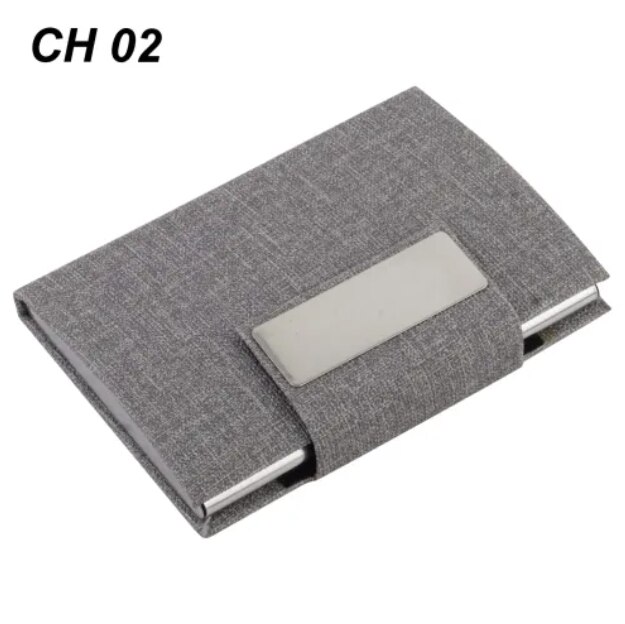
The right holder depends on more than its shell material or logo: card size, usable capacity, closure, surface finish, and branding method all affect whether it works in daily business use. By the end, you will have a practical specification for comparing suppliers, approving samples, and ordering branded holders that fit the cards and the occasion.
Key takeaways
- Approve internal dimensions with an actual 90 × 50 mm card sample.
- Choose leather, metal, wood, or plastic for the holder’s working conditions.
- Match pad printing, laser engraving, or embossing to the surface.
- Inspect samples, packaging, and logo alignment before approving bulk production.
Choose the Holder Construction for Its Working Conditions
A 90 × 50 mm Indian business card needs a pocket slightly larger than the card itself, with extra room for material thickness and the intended stack. Approve internal measurements using an actual card sample; “standard size” can reject 89 × 51 mm North American cards or leave excessive clearance.
Specify capacity separately: a tight sleeve may hold one card, not 10–20.
| Construction | Best workplace and user | Trade-offs |
|---|---|---|
| PU or leatherette sleeve | Daily sales visits, lightweight carry, and moderate budgets | Light and economical, but seams, adhesive, and edges wear with overfilling |
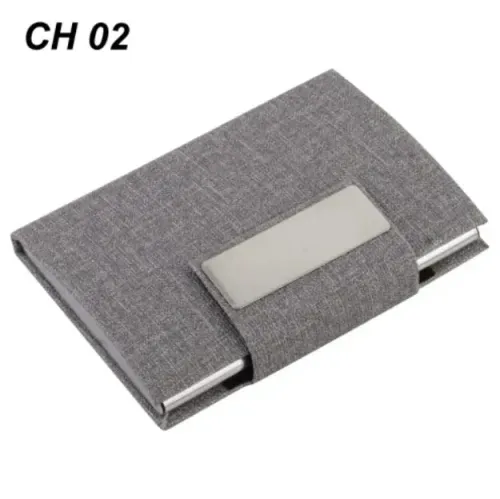
| Stainless steel or other metal case | Executive meetings, frequent handling, and premium gifting | Rigid and durable, but heavier; fingerprints and scratches show, and unfinished edges can mark cards |
| Fabric, elastic, or open sleeve | Events where cards must be accessed quickly | Fast access and low weight, but weaker protection and security |
| Acrylic, MDF, or wood case | Reception desks, displays, and desk-based storage | Visually distinctive, but less suitable for pockets or rough travel |
Choose a hinged lid or magnetic closure for secure transport, a spring mechanism for quick access, and an open sleeve for speed. Elastic bands add capacity but can loosen; slide-out cases protect cards while dispensing one at a time. Folded or unusually thick cards need a separate prototype.
For custom business card holders in Pune, ask for finish, edge treatment, hardware durability, and replacement terms. Bulk business card holders in Pune are usually more practical in PU, metal, fabric, acrylic, MDF, or wood; injection-moulded plastic adds tooling cost and suits only repeatable, high-volume designs.
Specify Card Size, Capacity, and Access Before Comparing Prices
Specify the internal pocket, not only the outside dimensions. Indian corporate cards commonly measure 90 × 50 mm; North American-format cards measure about 89 × 51 mm. Approve the pocket against an actual card because “standard size” can mean a tight fit or excessive movement.
1. State the card format: 90 × 50 mm, 89 × 51 mm, or a non-standard size. Require internal width and height, plus clearance for the card’s laminate, coating, or raised print.
2. State capacity as a usable quantity: one card for an exchange sleeve, or 10, 20, or another exact number for personal stock. Ask the supplier to test the full quantity, not one card; a sleeve that fits one card can split, distort, or refuse insertion when filled.
3. State whether the holder accepts thick cards, folded cards, or multiple pocket layouts. A single-card sleeve, multi-card case, and organiser serve different purposes and must not share one vague specification.
4. Describe access and security: open sleeve, slide-out mechanism, hinged lid, magnetic closure, spring mechanism, or elastic band. Record whether cards come out one at a time, whether the closure prevents cards spilling, and how much force opens it.
5. Add the closed external dimensions, pocket dimensions, closure position, and tolerance to the quotation. Approve a pre-production sample using the full card quantity, then check insertion, removal, closure strength, and card damage before comparing prices.
Match the Logo Method to the Surface and Finish
Choose the branding method by substrate, not by the logo file alone. For branded card holders for companies, put the holder type, material, capacity, internal dimensions, branding area, process, finish, packaging, sample approval, and defective-piece replacement terms in the quotation request. This prevents capacity and finish from disappearing from comparable quotes.
1. Select debossing or hot-foil stamping for leather and PU. Use screen printing or UV printing on relatively flat coated surfaces, and laser engraving on metal, wood, or suitable acrylic. Each process creates a different edge, depth, and colour result.
2. Specify the finish separately: matte, gloss, brushed, textured, or natural grain. Pantone matching is less exact on dark PU, textured leatherette, brushed metal, and wood than on a smooth white print surface. State whether colour accuracy, logo position, or material finish has priority.
3. Mark the logo area with measured distance from an edge, seam, hinge, or closure. Add an allowable position tolerance and define whether the mark belongs on the lid, front panel, inside flap, or sleeve.
4. Send vector artwork in AI, EPS, SVG, or print-ready PDF format, with fonts outlined and colours identified by Pantone or CMYK values. State the finished logo width and minimum line thickness.
5. Approve a pre-production or golden sample made on the actual material. Check colour, clarity, alignment, edge finishing, closure operation, surface marks, and packaging before releasing the bulk order. Set acceptance limits for scratches, missing hardware, stitching or adhesive failures, and incorrect quantities.
Build a Bulk Order That Survives Packaging and Inspection
Control a large run with an approved golden sample, written tolerances, and a defect decision made before production starts. For bulk business card holders in Pune, do not approve a shipment from one attractive photograph or an informal visual check.
1. Request a pre-production sample and test card insertion, removal, capacity, closure strength, logo position, print or emboss clarity, edge finishing, stitching, adhesive bonds, and surface marks. Sign and date the approved sample.
2. Put measurable limits on the purchase order: internal and external dimensions, logo-position tolerance, acceptable finish variation, scratch limits, missing hardware, and allowable stitching or adhesive failures.
3. Choose an inspection-sampling plan before the run. ISO 2859-1 provides a recognised method for selecting sample size and acceptance numbers; record the inspection level and AQL rather than leaving acceptance to personal judgement.
4. Inspect cartons for the correct quantity, item variation, individual protection, and label accuracy. Use sleeves, tissue, or separators when surfaces can rub; executive gifting may need a presentation box instead of a bulk polybag.
5. Define the remedy in writing: replacement, credit, or rework for defective pieces. Separate measurable defects from minor cosmetic variation, photograph rejected units, and retain the inspection report with the packing list.
Approve the shipment only after checking random cartons, not just the top layer. A holder that passes logo inspection but arrives scratched, short-packed, or with loose hardware has still failed the order.
What to Ask a Pune Supplier Before Approving Production
Approve production only after the supplier answers your specification in writing and passes a physical sample check. A corporate accessories supplier in Pune should quote usable pocket capacity separately from external dimensions, confirm compatibility with your actual card, and identify whether the design is for exchanging cards, carrying 10–20 cards, or storing multiple contacts.
Request these documents and confirmations:
- A written quotation showing material, internal pocket dimensions, capacity, closure, logo method, unit price, taxes, tooling, delivery date, and packaging.
- A pre-production sample or signed golden sample. Test card insertion and removal, closure strength, edge finishing, stitching or adhesive, surface marks, logo alignment, and packaging.
- An artwork proof showing logo size, position, colour reference, and finish. Approve a physical logo strike on the actual leather, PU, metal, or textured surface; fine debossed lettering can disappear after pressing.
- A quality checklist defining acceptable scratches, loose stitching, uneven printing, colour variation, and dimensional tolerance.
- A replacement or credit process for rejected units, plus the inspection point before dispatch.
| Comparison point | Evidence to compare | Reject or revise when |
|---|---|---|
| Internal fit | Pocket measurements tested with your card sample | “Standard size” is the only specification |
| Branding | Sample on the production material | Approval relies only on a digital mock-up |
| Fulfilment | Lead time, quantity tolerance, carton details | Packaging and shortage responsibility are absent |
Ashcube can be assessed against the same checklist; a familiar supplier still needs documented approval before bulk production.
Related product
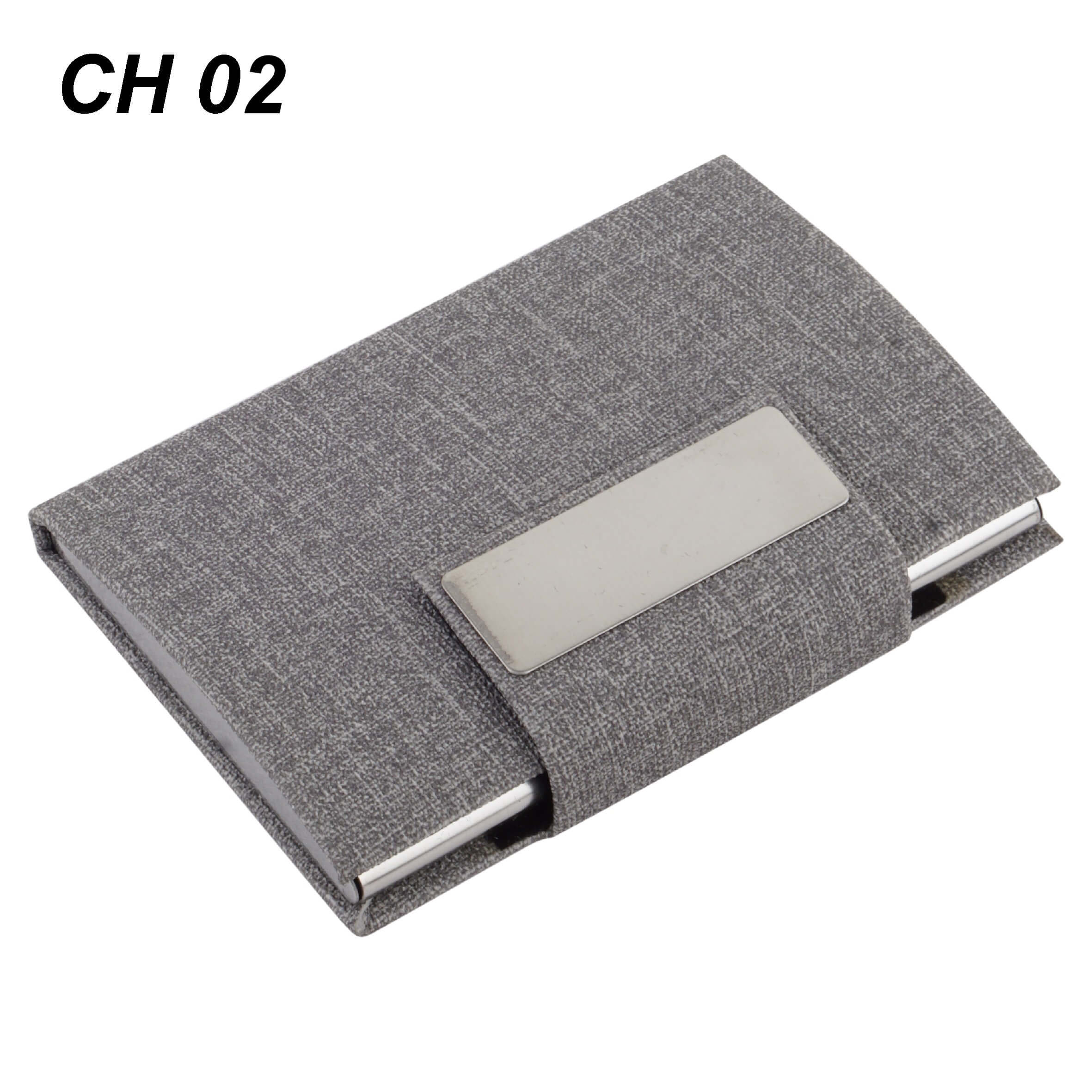 | Accessories Premium business card holders designed for professionals who want to make a lasting first impression. View product → |
Frequently asked questions
How should you choose business card holder construction?
Choose the material for its working conditions: consider daily handling, moisture, scratches, weight, cleaning, and the finish you want to maintain.
What dimensions and capacity should you specify?
Give the supplier an actual card sample, the card dimensions, the required stack capacity, and the clearance needed for material thickness and easy access.
Which logo method suits a branded card holder?
Match the method to the surface and finish. Use pad printing for suitable smooth surfaces, laser engraving for durable contrast on compatible materials, and embossing for leather or similar surfaces.
What should you check before placing a bulk order?
Approve a production sample, inspect logo position and finish, confirm packaging protects the holders, and define inspection criteria for scratches, dents, stains, and dimensional errors.
What should you ask a Pune supplier before production?
Ask about material specifications, internal dimensions, capacity, logo process, sample approval, lead time, packaging, quality checks, replacement terms, and minimum order quantity.
Keywords